What is cold email?
Quick answer
A cold email is a first message sent to someone who has had no contact with you, usually to start a business conversation, like a sales pitch, partnership idea or job inquiry. "Cold" means there is no existing relationship, unlike a reply or a follow-up.
Last updated
Updated · By Robert Breen
Why it matters for a small business
Done well, cold email is a normal way for small businesses to find customers and partners. Done badly, it is spam, and it can damage your sender reputation, your brand and your ability to reach anyone by email. The difference is relevance. A short note to the right person about a problem they really have is welcome far more often than a long generic pitch sent to thousands.
Cold email is also regulated. In the United States, the CAN-SPAM Act sets rules for commercial email, including honest sender details and subject lines, a valid postal address and a clear way to opt out that you honor promptly. Other countries have their own rules, and some, such as Canada and much of Europe, are stricter about consent before you send. Check the rules where your recipients live, and ask a qualified advisor if you are unsure.
In a real lesson: Build an n8n AI Agent That Writes Deal Follow-Ups
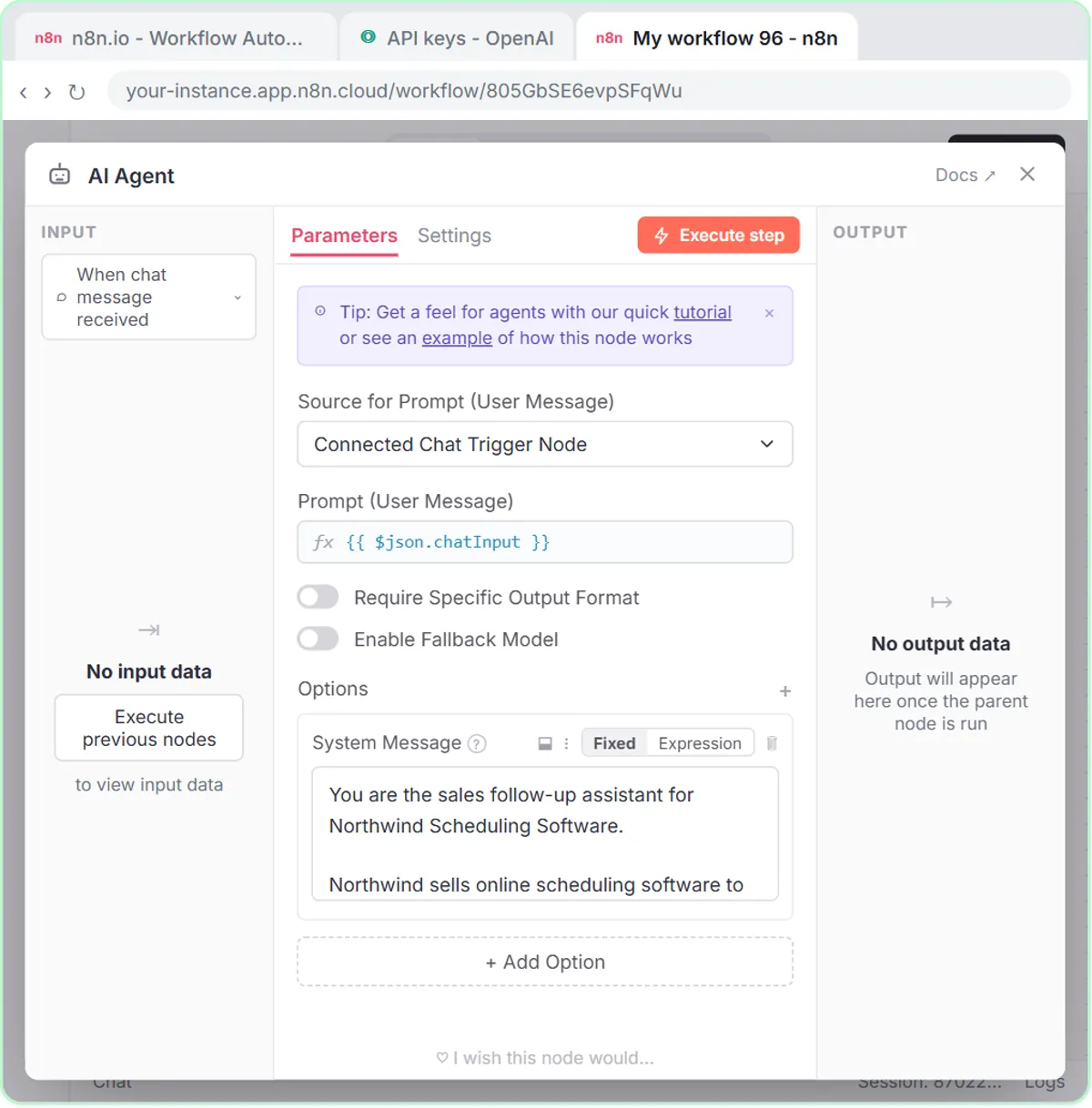
Stepthrough does not have a lesson on sending cold email, and the AI Deal Follow-Up Agent lesson is the opposite case: every prospect has already spoken with Northwind Scheduling Software, a made-up software company. Maria Lopez "had a demo today" and Sam Patel's "trial ends Friday." Those are warm follow-ups, not cold emails.
Still, the system prompt has rules that make any first message better. It asks for a tone that is "friendly, plain, specific and brief," tells the agent to "Keep each message under 80 words and end with one clear ask," and says "Do not invent prices, discounts or results." A cold email that follows those rules is short, honest and easy to answer.
The agent also saves each draft to the Deal Follow-Ups sheet instead of sending it, so a person reads it first. That review step matters even more for cold outreach, where a careless message reaches someone who never asked to hear from you.
Try this lesson free or read the step-by-step guide.
Common confusions
Cold email vs spam
Spam is unwanted bulk email, often deceptive. A cold email can be legitimate if it is relevant, honest, sent in modest numbers and easy to opt out of. Volume and deception are what turn outreach into spam.
Cold email vs follow-up email
A follow-up email continues a conversation that already exists. A cold email starts one. Follow-ups can reference what the person said. Cold emails have to earn attention from scratch.
Tips
- Research each recipient enough to write one specific sentence about them. If you cannot, they may not be a fit.
- Send from a properly set up domain and watch email deliverability before you scale up.
- Include an easy way to opt out, and remove people immediately when they ask.
- Use AI to draft and personalize, then read every message yourself before it goes out.
Related terms
More Business terms
Where you use it: free lessons
- Build an n8n AI Agent That Writes Deal Follow-Ups (n8n, 12 min)
- Build an AI Demo Request Form That Qualifies Leads (Lovable and n8n, 15 min)
Prompt templates that use it
Frequently asked questions
- Is cold email legal?
- In many places it is legal if you follow the local rules, such as CAN-SPAM in the United States. Some countries require consent first. This is general information, not legal advice, so check the laws that apply to your recipients.
- Should AI send cold emails automatically?
- It is safer to let AI draft and have a person approve. Automated sending at volume can break anti-spam rules, hurt your domain's reputation and put mistakes in front of strangers.