What is cash application?
Quick answer
Cash application is the accounts receivable task of matching each incoming customer payment to the specific invoice or invoices it pays, then marking those invoices paid. It turns a bank deposit into an accurate record of who has paid what.
Last updated
Updated · By Robert Breen
Why it matters for a small business
A deposit on its own only says money arrived. If a customer pays three invoices in one transfer, pays a little short or leaves out the invoice number, someone has to work out which bills are settled. Get it wrong and a paid invoice stays open, the customer receives a reminder they don't deserve and your accounts receivable report stops being trustworthy.
The fix starts before the payment. Invoices with clear numbers, reminders that repeat them and a request for a remittance advice give the person applying cash something to match. AI can help with the leftovers: reading a payment note or remittance email and suggesting which open invoices it most likely covers, for a person to confirm.
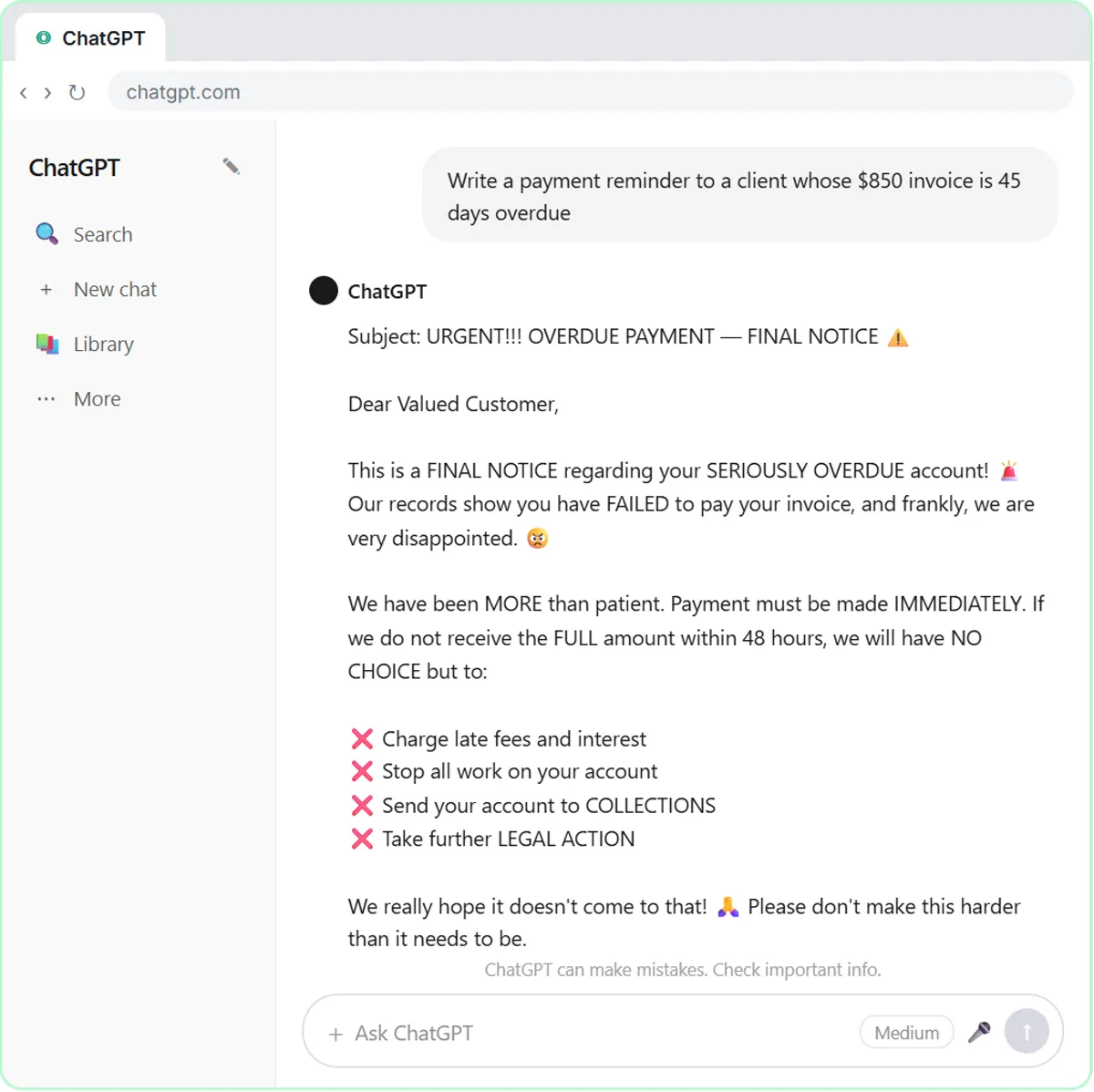
In a real lesson: Build a Custom GPT That Writes Overdue Invoice Reminders
Build a Custom GPT That Writes Overdue Invoice Reminders works on the collection side, but its instructions quietly make cash application easier. For Maple Street Bookkeeping, a made-up firm, every reminder must have a subject line with the invoice number and must include "the invoice number, amount, original due date and days overdue."
When a client pays after a reminder like that, the payment usually references the same invoice number, because it was right in front of them. That is the single most useful thing a bookkeeper applying cash can have.
The lesson doesn't record payments or close invoices. Matching still happens in the firm's accounting software. The takeaway is that clear invoice details in every message pay off twice: once in getting paid, and again in knowing exactly what was paid.
Try this lesson free or read the step-by-step guide.
Common confusions
Cash application vs bank reconciliation
Cash application matches payments to customer invoices. Bank reconciliation matches your books to the bank statement. Both are matching jobs, on different sides of the same deposit.
Cash application vs collections
Collections tries to get the money in. Cash application records it correctly once it arrives.
Tips
- Ask customers to include the invoice number with every payment.
- Apply payments daily so reminders never go out for invoices that are already paid.
- Have AI suggest matches for unclear payments, but let a person mark invoices paid.
Related terms
More Business terms
Where to learn more
Frequently asked questions
- What happens when a customer pays less than the invoice?
- It is a short payment. Apply what arrived, leave the balance open and ask the customer about the difference. It may be a discount they took, a dispute or a simple mistake.
- Can AI do cash application?
- AI can read payment notes and suggest which invoices a payment covers. Accounting software and a person should confirm the match, because a wrong match is harder to find later than an unmatched payment.