What is a small language model (SLM)?
Quick answer
A small language model, or SLM, is a language model with far fewer internal settings than the biggest chat models. It knows less and reasons less deeply, but it is cheaper, faster, and some can run on a laptop or a company server instead of a vendor's cloud.
Last updated
Updated · By Robert Breen
Why it matters for a small business
Most office AI jobs are narrow: sort this email, pull three fields from this form, rate this lead hot or warm. You do not need the most capable model in the world for that, any more than you need a senior partner to stamp envelopes. A smaller model can do a narrow, well-described job well enough, and it costs less every time it runs.
Size also affects privacy. Because some small models can run on hardware you control, the text never has to leave the building. That matters to firms that handle client files and cannot send them to an outside service. The trade-off is real, though: small models are more likely to miss nuance, lose track of long documents and get facts wrong, so they need clear prompts and a person checking the output.
In a real lesson: Build an AI Demo Request Form That Qualifies Leads
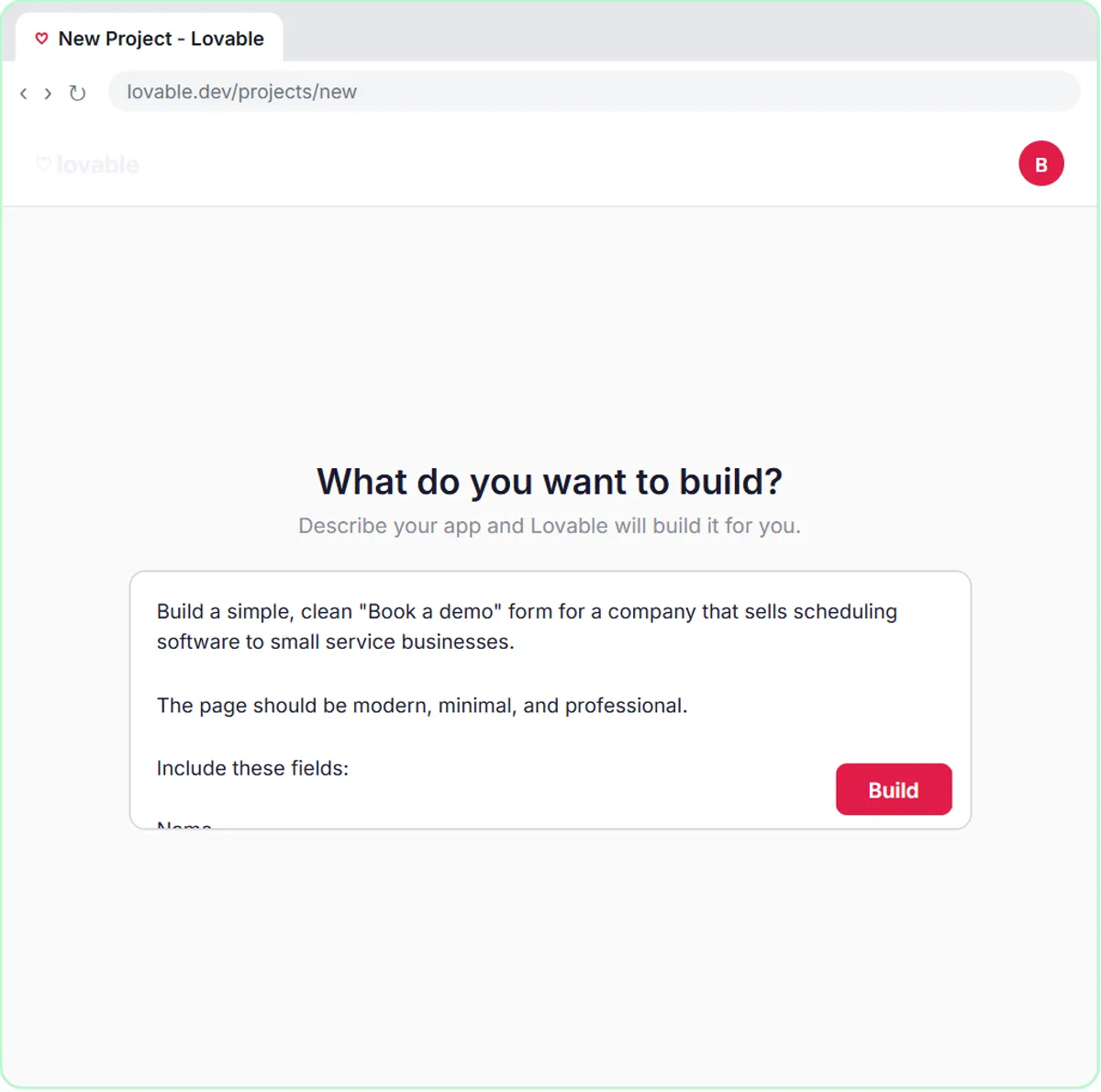
In the AI Demo Request Form lesson, you build a "Book a demo" form for Northwind Scheduling Software, a made-up company, and connect it to an n8n agent. When you pick the model, the lesson says to choose gpt-5-mini, "fast and cheap."
That choice shows the thinking behind small models, even though OpenAI does not publish the size of its mini models and the lesson never calls it an SLM. The job is narrow. The system message says "Rate each lead Hot, Warm, or Nurture," gives one rule for each, then asks the agent to add the lead to the Leads sheet and email one next step.
A short rule-based task like that does not need the biggest model on the menu. If the agent later had to read long contracts or write careful client advice, you would test a larger model and compare the results before switching.
Try this lesson free or read the step-by-step guide.
Common confusions
Small language model vs mini tier
Vendors sell lighter versions of their chat models with names like mini or flash. They follow the same idea, cheaper and faster, but they still run in the vendor's cloud. Many SLMs are open-weight models you can download and run yourself.
Small language model vs large language model
Both work the same way, predicting text one piece at a time. A large language model has many more settings, so it usually handles harder reasoning and broader knowledge. There is no official cutoff where small ends and large begins.
Tips
- Start with a small or mini model for sorting, rating and extracting, and move up only if the output is not good enough.
- Test with ten real examples before you decide. Small models can be fine on easy cases and fail on odd ones.
- Running a model on your own hardware does not remove the need for a policy. Someone still decides what data goes in.
Related terms
More AI basics terms
Where you use it: free lessons
- Build an AI Demo Request Form That Qualifies Leads (Lovable and n8n, 15 min)
- n8n AI Agent Tutorial: Save Social Media Ideas to Google Sheets (n8n, 12 min)
Frequently asked questions
- Can I run a small language model on my own computer?
- Some, yes. Families such as Microsoft's Phi and Google's Gemma include small versions that can run on a decent laptop with free tools. Speed depends on your hardware, and setup takes some patience. Check each model's license before using it for business.
- Is a small model safer for private data?
- Only if it runs somewhere you control. A small model hosted by a vendor sends your text to that vendor just like a big one. Where the model runs matters more than its size.