What is a service level agreement (SLA)?
Quick answer
A service level agreement, or SLA, is a written commitment that defines the standard of service a provider will deliver, such as responding to urgent issues within one hour or fixing routine ones within three days, and what happens if the standard is missed.
Last updated
Updated · By Robert Breen
Why it matters for a small business
Without agreed standards, "urgent" means something different to everyone. A manager thinks a broken printer is critical, while IT thinks it can wait until Friday. An SLA replaces opinions with numbers. People know what to expect, support teams know what to prioritize and anyone can check whether the promise was kept.
Internal SLAs, between teams, are just as useful as ones with customers or vendors. The key is setting commitments you can actually meet. A promise to answer everything in an hour that you cannot keep is worse than a realistic four-hour one you hit every time. If an SLA has legal or financial consequences, have a qualified professional review it.
In a real lesson: Build an AI Vendor Follow-Up Agent in n8n
In the AI Vendor Follow-Up Agent lesson, an n8n agent for Ridgeline Supply Co., a made-up warehouse and distribution business, drafts follow-ups to vendors about late or pending purchase orders. The system prompt tells it to "Give a reply-by date: 1 business day if late, 2 if pending."
That rule works like a small, informal response standard. A late order is more serious, so the vendor gets a shorter deadline. The prompt also says to name the PO number, state the problem in one sentence and ask one clear question, and it forbids threatening "to cancel orders or invent penalties." So the reply-by date is a firm request, not a formal contract term.
A real SLA would be agreed in writing with the vendor beforehand and would say what counts as late and what remedy applies. The lesson does not do that, and the agent has no authority to impose consequences. The sheet's Due Date column simply lets your team see which vendors missed the reply-by date.
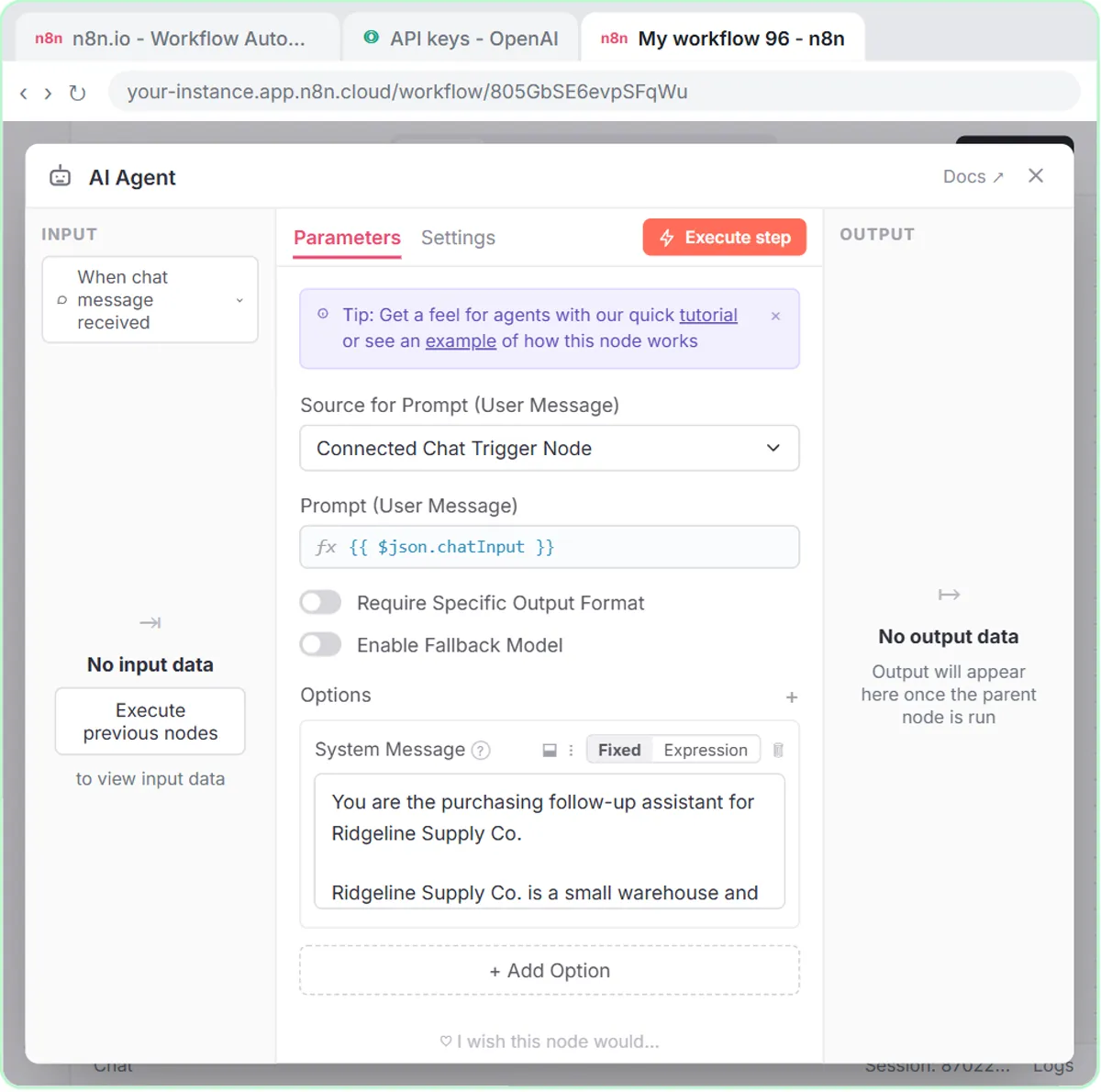
Try this lesson free or read the step-by-step guide.
Common confusions
SLA vs contract
An SLA is usually one part of a larger contract and focuses only on service levels, like response and resolution times. The contract covers price, term and liability. Both can be legally binding.
SLA vs goal
A goal is something you hope to reach. An SLA is a commitment with consequences if you miss it. An internal goal can flex. A customer SLA should not be set until you are confident you can hit it.
Tips
- Define each priority level in plain words and attach a response time and a resolution time.
- Measure your real performance for a month before promising a number to a customer.
- State what the clock starts on, such as when the request is received, and which hours count.
Related terms
More Business terms
Where you use it: free lessons
- Build an AI Vendor Follow-Up Agent in n8n (n8n, 12 min)
- Build an AI Maintenance and IT Request Form (Lovable and n8n, 15 min)
Frequently asked questions
- Can a small business have SLAs?
- Yes. Even a short list of response times, such as same-day for urgent requests, helps. Start internally, then offer commitments to customers once you have shown you can meet them.
- What happens when an SLA is missed?
- That should be written in the agreement. Common remedies include credits, extra support or an escalation to a manager. For legal or financial terms, have a professional review the wording.