Why this matters
A recognisable character makes a small brand memorable, and insurance is hard to make friendly. An illustrator charges for the design and again for every new scene (example numbers), and stock photos look like every other agency.
In Higgsfield you design the character once as a sheet, then attach the sheet as the reference for every scene. An illustrated character also borrows nobody's face and cannot be mistaken for a real advisor or customer.
Practice
Do every step yourself in a practice copy of the real tool. It checks your work, and “Do it for me” finishes any step you get stuck on.
What you’ll build
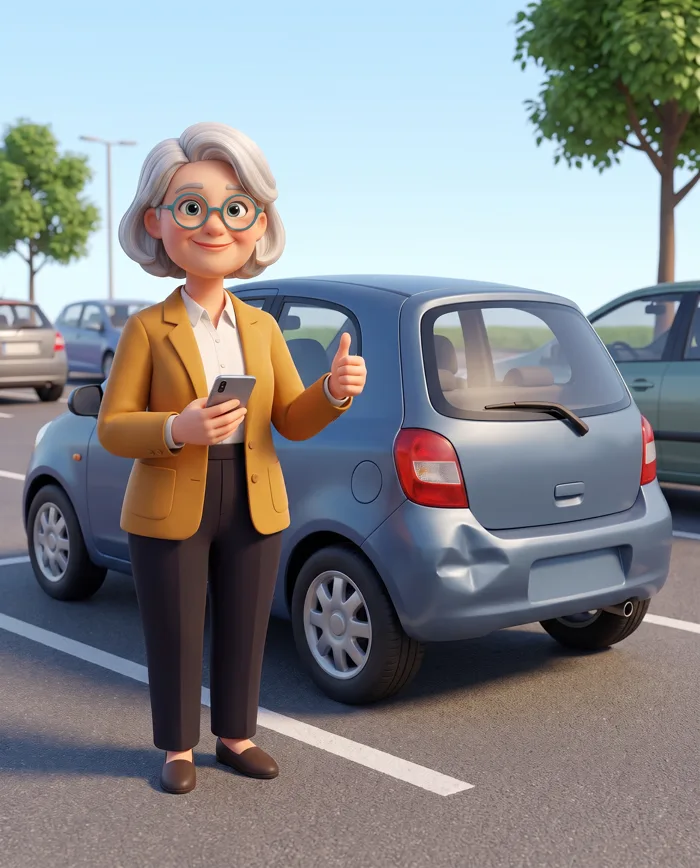
You help Priya Shah create Penny, an illustrated advisor, as a character sheet (2 credits), put her in three scenes with the sheet as reference (2 each), catch an Apple logo the model added to her laptop, and animate one scene (7.5). 15.5 credits in all.
What you need
- Nothing to start the practiceA practice copy with our real outputs. Penny is made up.
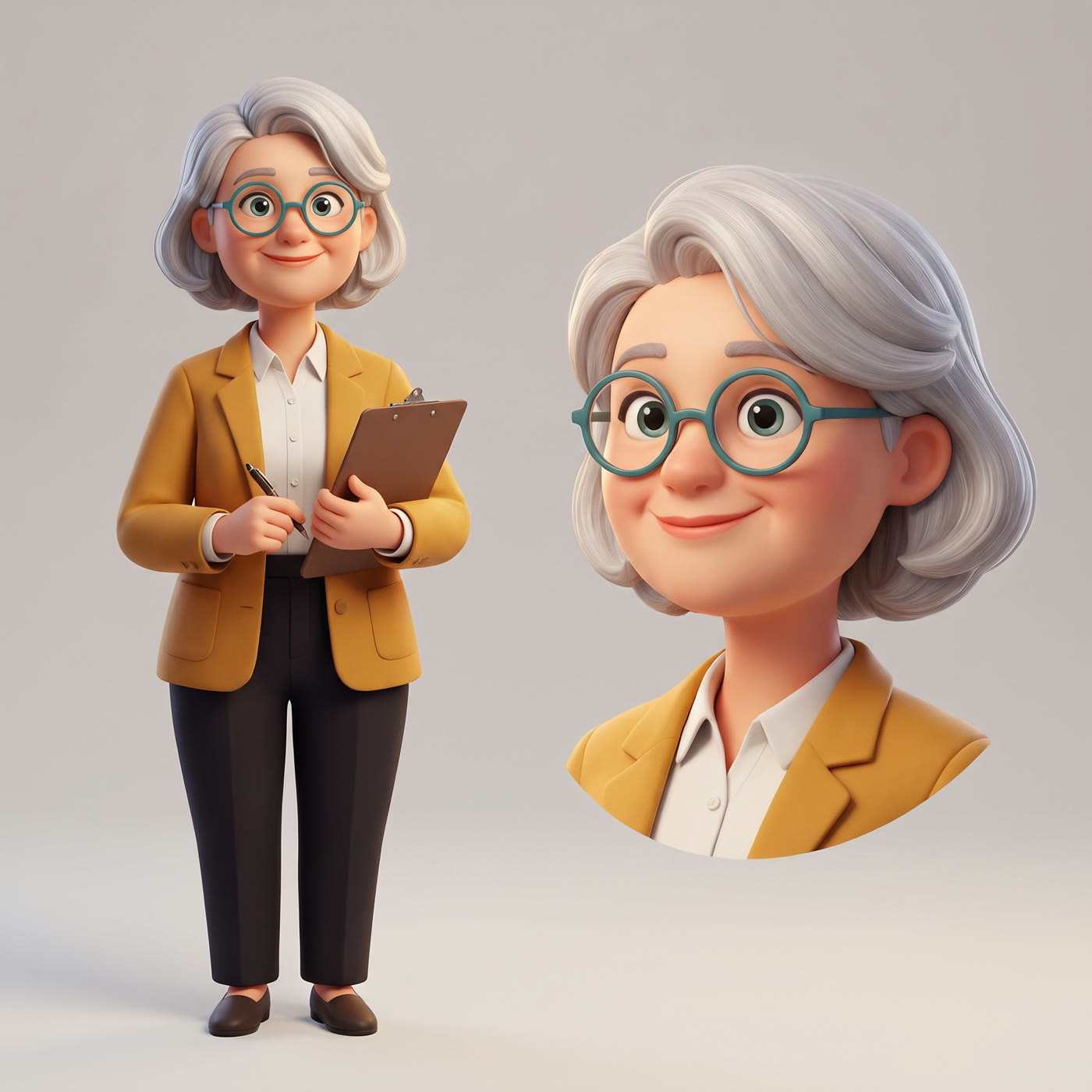
- The character sheetUse it as a reference to try the scene prompts.
- A Higgsfield account with credits, to do it for realHiggsfield sells monthly plans with credits; check current plans and what the free tier includes before you rely on it. Every cost in this lesson is what our run cost on 29 October 2026. (Affiliate link: I may earn a commission, at no cost to you.)
Concepts
Consistency is a reference plus repetition
The model does not remember Penny between images. The sheet (full body and face on a plain background) and the same three or four features repeated word for word in every prompt are its memory. All three of our scenes kept her silver bob, teal glasses and mustard blazer.
Watch for borrowed brands
Our renewal scene came back with an Apple logo on Penny's laptop. A real company's logo in your ad suggests a partnership you do not have. Add "no logos on any device" or crop it out.
Illustrated mascot or trained character
Higgsfield can train a character from 5 to 20 photos of a real person. That is for your own face, or someone who agreed in writing. For a brand mascot, an illustrated sheet is cheaper and borrows nobody's likeness.
Do it for real
Now repeat it in your own account. Tick each step as you go.
Downloads
- Every prompt in this course (.txt)The exact prompts, settings, credits and what went wrong in each of our runs.
- Penny character sheet (.jpg)The sheet we used as the reference for every scene.
Quick check
3 questions to check you’ve got it.
1. What keeps a character consistent across images?
- Using the same model
- Attaching the same sheet and repeating the defining features in every prompt
- A longer prompt
Show the answer
Attaching the same sheet and repeating the defining features in every prompt. The sheet and the repeated words are the model's only memory.
2. A scene shows an Apple logo on the character's laptop. What do you do?
- Post it
- Regenerate with "no logos" or crop it
- Add your own logo next to it
Show the answer
Regenerate with "no logos" or crop it. A real brand in your ad suggests a partnership you do not have.
3. When is training a character on real photos appropriate?
- For any employee
- For your own face, or someone who agreed in writing
- For a celebrity look-alike
Show the answer
For your own face, or someone who agreed in writing. Likeness belongs to the person.
Higgsfield: Rescue a Low-Res Photo for a Proposal or Print
Next, a consulting firm rescues a low-res photo for a printed proposal.
Start module 6 →