What is sentiment analysis?
Updated · By Robert Breen
Sentiment analysis is identifying the emotion or attitude in a piece of text, such as positive, negative or neutral, or more specific feelings like frustrated, worried or delighted. AI models can label sentiment from a prompt and also use it to set the tone of a reply.
Why it matters for a small business
How a customer feels often matters as much as what they asked. An upset customer who gets a breezy, cheerful reply feels ignored, even if every fact is right. Reading sentiment first, whether you do it or the AI does, helps you answer the feeling as well as the question.
At scale, sentiment labels help you sort. A business can flag every negative review or angry email for a manager, track whether feedback is improving over time, or route a worried client to a phone call instead of another email.
In a real lesson: Reply Faster to Clients Chasing Their Refund: ChatGPT for Tax and Bookkeeping Firms
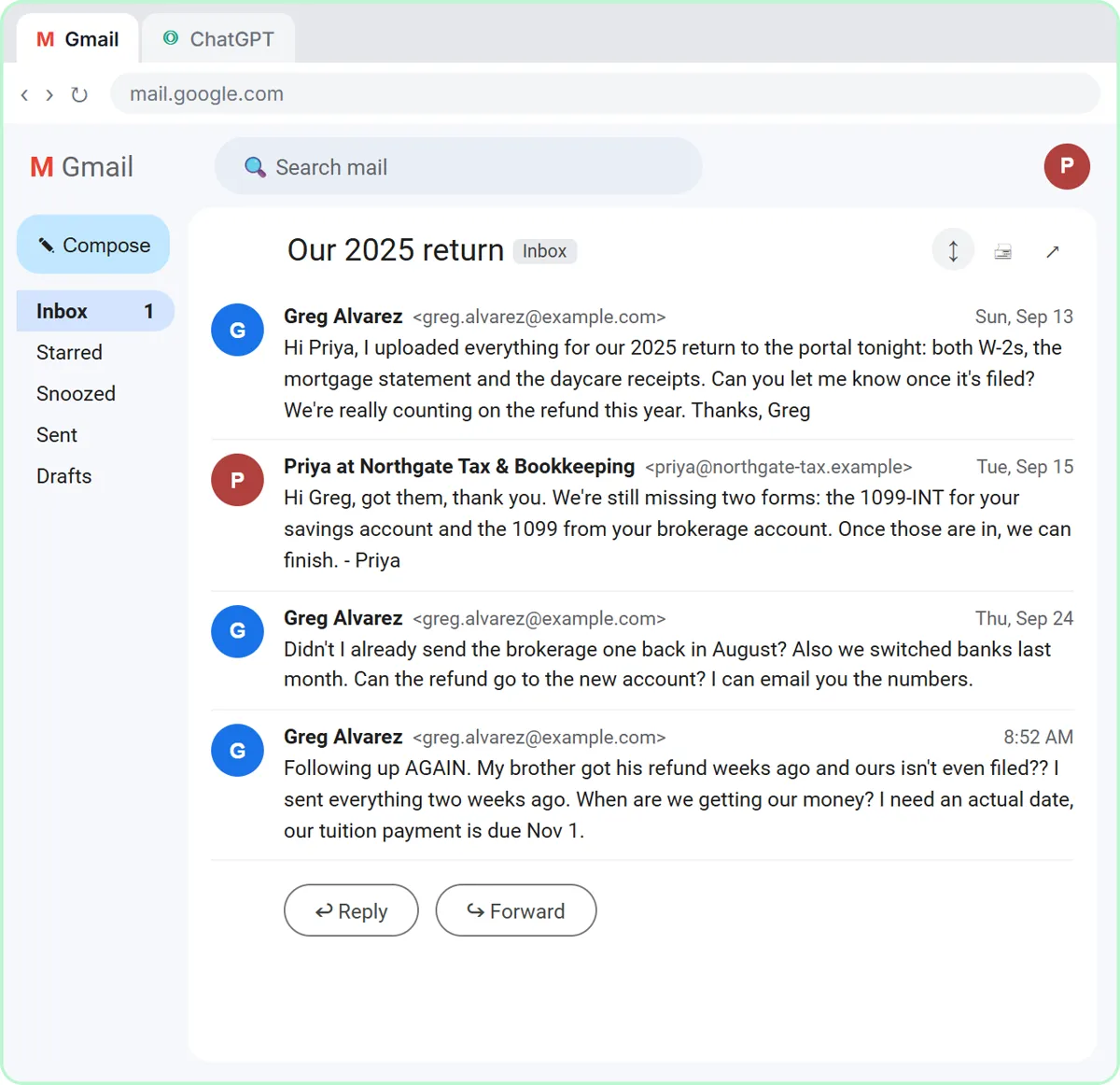
Stepthrough has no lesson that asks AI for a sentiment label, but Reply Faster to Clients Chasing Their Refund shows sentiment in action. Greg, a client of Northgate Tax & Bookkeeping (a made-up firm), wants a refund date while two tax forms are still missing, and the firm missed his Sep 24 email. He is anxious and a little frustrated.
The instructions you paste respond to that feeling directly: tone calm, warm and professional, like a firm that knows him, and apologize once for missing his email. The facts include fact 7, "We missed Greg's Sep 24 email. That's on us," so the apology is real rather than generic.
The final reply also names what is behind his worry: "I know the tuition payment is on your mind, so I'll be straight with you." It then says honestly that the firm can't promise a refund date. Matching the tone to his mood, while refusing to overpromise, is what sentiment awareness looks like in a real reply.
Try this lesson free or read the step-by-step guide.
Common confusions
Sentiment vs tone
Sentiment is the feeling in the text you received. Tone is the voice of the text you send back. You read the customer's sentiment to choose your tone.
Sentiment analysis vs text classification
Sentiment analysis is one kind of text classification where the labels are feelings. You can also classify by topic, urgency or job type, and many workflows combine them.
Tips
- To get a label, ask for one from a fixed list (positive, neutral, negative, urgent) plus a one-line reason.
- Sarcasm and mixed messages trip AI up. Review anything labeled negative before acting on it.
- In a reply prompt, name the feeling you see ("she's worried about the date") so the AI addresses it.
Related terms
Where you use it: free lessons
- Reply Faster to Clients Chasing Their Refund: ChatGPT for Tax and Bookkeeping Firms (ChatGPT, 10 min)
- Reply Faster: Turn a Messy Customer Email Thread into a Clear, Friendly Reply (ChatGPT, 9 min)
Prompt templates that use it
Visual guide
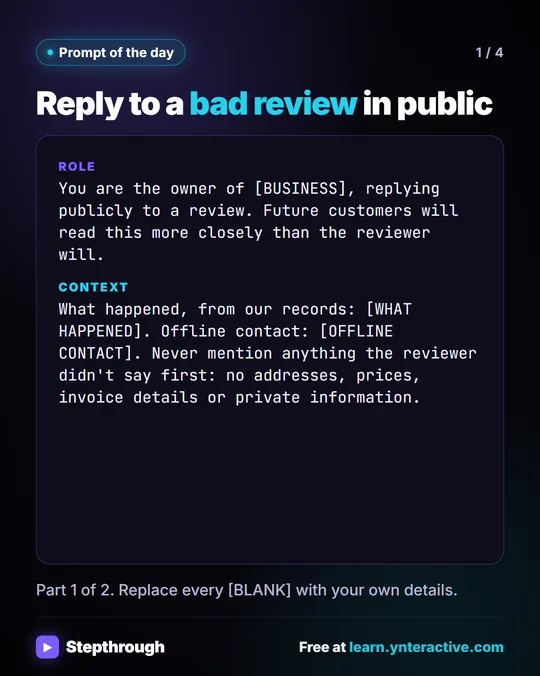
Sentiment analysis in a few slides, with the same guide written out as text.
Frequently asked questions
- Can ChatGPT do sentiment analysis?
- Yes. Paste the text and ask it to label the sentiment from a list you give it and explain why in one sentence. It is less reliable with sarcasm or very short messages.
- What can a small business use sentiment analysis for?
- Common uses are flagging upset customer emails, sorting reviews, and spotting trends in survey comments so you know where to follow up first.