What is expense reimbursement?
Updated · By Robert Breen
Expense reimbursement is paying an employee back for a business cost they paid for themselves, like a client lunch or supplies picked up on the way to a job. It usually needs a request, a receipt, a business purpose and an approval before the money goes out.
Why it matters for a small business
Reimbursements are small, frequent and annoying. Requests arrive by text, email and crumpled receipt, someone has to check each one against the policy, and employees wait weeks to get their own money back. The usual problems are missing receipts, unclear purposes and amounts that need a manager's OK.
Those checks are rules, which makes them a good fit for AI. A form collects the same details every time, and an AI agent can sort each request by your policy (approved, needs a receipt, needs a manager) and tell the employee what to do next immediately. A person still approves anything over the limit and does the actual payment.
In a real lesson: Build an Expense Reimbursement Form With AI Policy Checks
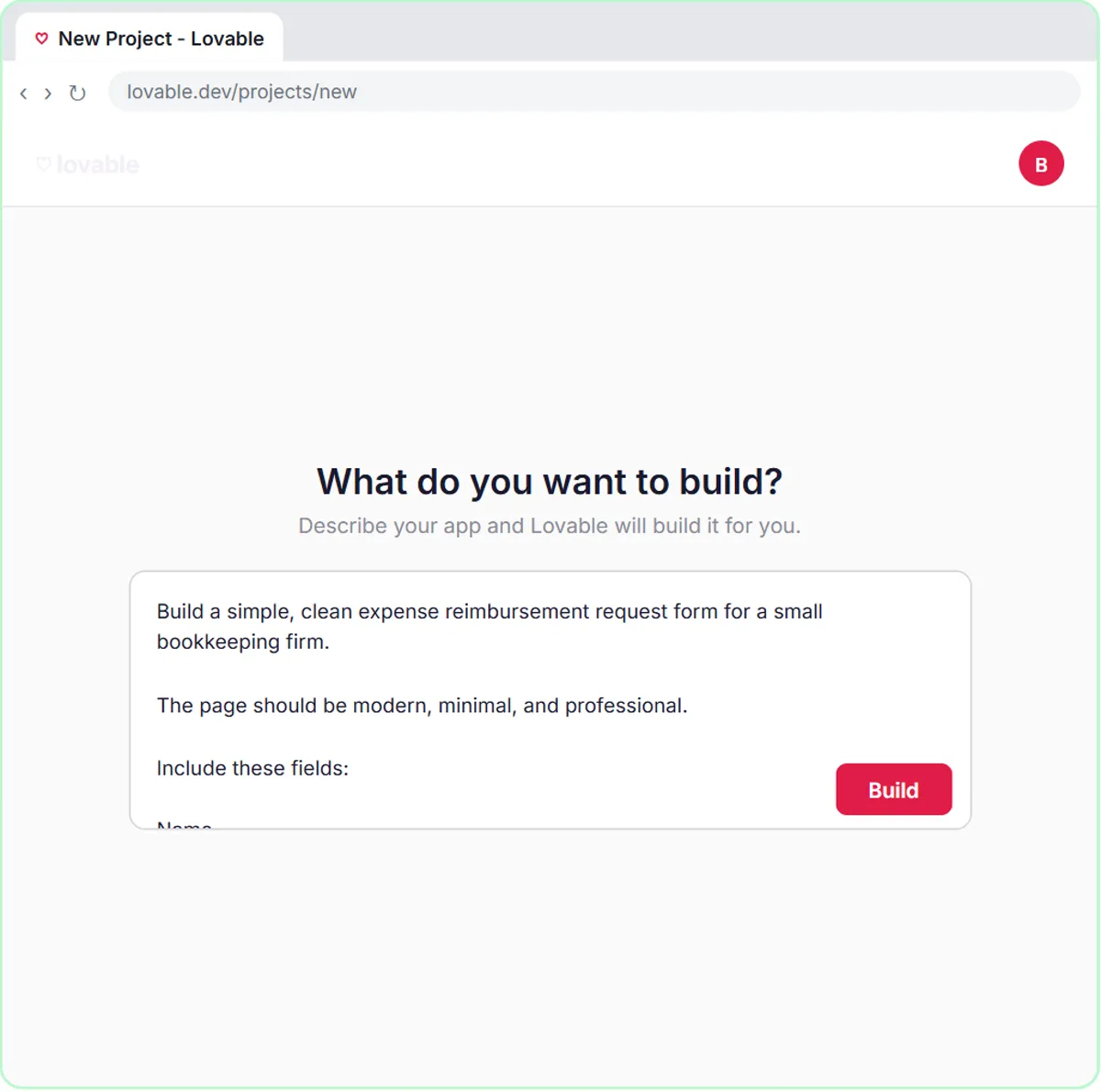
In the Expense Reimbursement Form lesson, you build a form in Lovable for Maple Street Bookkeeping, a made-up firm, with Name, Email, Expense details and Amount, and connect it to an n8n webhook. A prompt template passes the fields to an AI Agent as {{ $json.body.expense }} and {{ $json.body.amount }}.
The system message turns the policy into three statuses: "Needs receipt: the employee says there is no receipt, or does not mention one. Needs manager OK: the amount is $100 or more. Approved: under $100, with a receipt and a clear business purpose." It then saves the request to the Expense Requests sheet and emails the employee "the status and what to do next," with a closing rule: "Do not give tax advice."
In the test submission the employee says the receipt is missing, so the agent marks it Needs receipt, logs a row and emails them through Gmail before the form shows its confirmation.
Try this lesson free or read the step-by-step guide.
Common confusions
Reimbursement vs company card
With a company card the business pays directly and the employee submits the receipt afterwards. With reimbursement the employee pays and the business pays them back. Both need receipts and a business purpose.
Reimbursement vs expense categorization
Reimbursement is about whether and when to pay the employee back. Expense categorization is about where the cost goes in your books. An approved reimbursement still needs a category.
Tips
- Write your policy as statuses with clear thresholds, like the $100 line in the lesson, before you hand it to AI.
- Let the AI approve only the clear cases. Anything unusual should go to a person.
- How reimbursements are handled for tax purposes depends on your plan and location, so check with your accountant.
Related terms
Where you use it: free lessons
- Build an Expense Reimbursement Form With AI Policy Checks (Lovable and n8n, 15 min)
More free tutorials
Prompt templates that use it
Frequently asked questions
- Can AI approve expense reimbursements?
- It can apply clear rules, like approving small requests with a receipt. Keep a person on anything over your limit or outside the policy.
- What should a reimbursement form ask for?
- At minimum: who, what it was for, the amount and whether there is a receipt. The lesson's form uses name, email, expense details and amount.