What does closing the books mean?
Updated · By Robert Breen
Closing the books is the routine of finishing a period's bookkeeping, usually a month, quarter or year: every account reconciled, every transaction categorized, adjustments made, and the period locked so the numbers stop changing. After the close, the reports for that period are final.
Why it matters for a small business
Until a period is closed, its numbers can still move. A late receipt, a corrected category or a missing statement can change profit, tax estimates and the cash picture. Owners, lenders and tax preparers all need numbers they can rely on, which means someone has to say "this quarter is done."
The close depends on other people. Statements, receipts, loan papers and answers to "what was this charge?" usually have to come from the client or the owner. Most delays are waiting, not working. Writing down what is needed, from whom and by when, and following up, is where an AI-drafted recap helps the most. This page is general information; your accountant or CPA should set your close process.
In a real lesson: Turn a Client Meeting into Action Items and a Follow-Up Email (Accounting Firms)
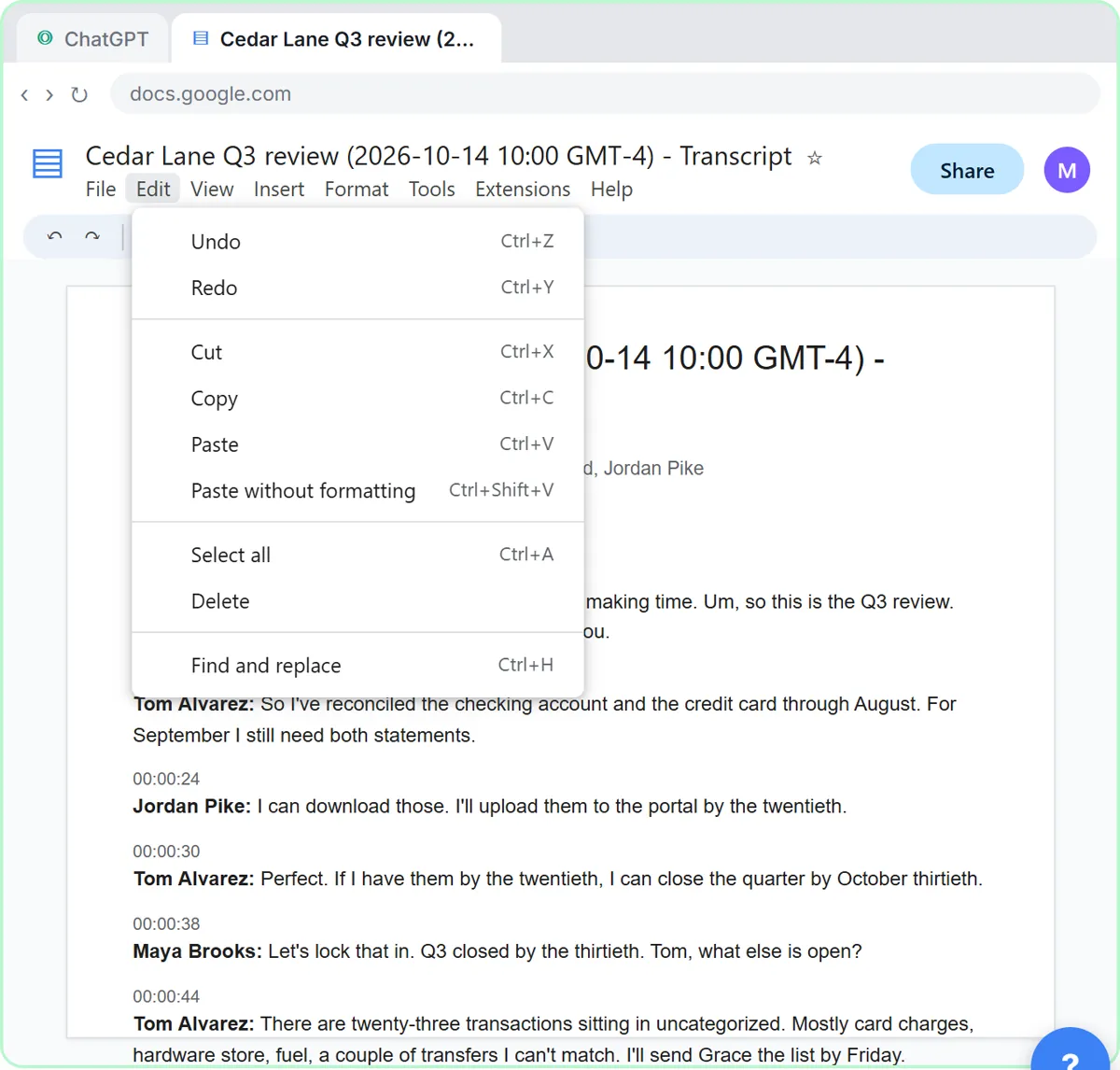
The Summarize a Client Meeting lesson is built around a close. In the Q3 review between Millbrook Accounting and its client Cedar Lane Landscaping (both made up), Tom Alvarez says: "If I have them by the twentieth, I can close the quarter by October thirtieth." Maya Brooks answers: "Let's lock that in. Q3 closed by the thirtieth."
Everything else in the meeting is a dependency of that date: September bank and card statements from Jordan, 23 uncategorized transactions for Grace to explain, and paperwork for a truck bought in August so it can be recorded as equipment with a loan, not an expense.
When ChatGPT turns the transcript into an action items table, the close becomes visible as a set of tasks with owners. Two due dates come back "Not stated" because nobody said them. You supply them, and the follow-up email to the client lists exactly what they owe and by when, which keeps the October 30 close on track.
Try this lesson free or read the step-by-step guide.
Common confusions
Closing the books vs filing taxes
The close finalizes your records. Tax returns are prepared from closed books, often by a different deadline and sometimes with adjustments only a tax professional should decide.
Soft close vs hard close
A soft close finishes the main work but allows late changes. A hard close locks the period in the software. Small businesses often soft close monthly and hard close at year-end.
Tips
- Keep a checklist for every close and reuse it. The month-end close checklist prompt can draft one.
- Set the close date first, then work backward to when you need each document.
- Send the client a short list of what is missing as soon as the meeting ends.
Related terms
Where you use it: free lessons
- Turn a Client Meeting into Action Items and a Follow-Up Email (Accounting Firms) (ChatGPT, 9 min)
- Build an AI Agent That Categorizes Business Expenses (n8n, 12 min)
Frequently asked questions
- How long should a month-end close take?
- It depends on the business and how quickly documents arrive. Many small businesses aim to close within a few weeks of month end; the bigger factor is usually waiting on statements and answers.
- Can I change numbers after the books are closed?
- Usually through an adjusting entry in a later period, not by editing the closed one. Ask your accountant how your software and your situation handle it.