What is voice cloning?
Updated · By Robert Breen
Voice cloning creates a synthetic voice that sounds like a specific real person, built from recordings of that person speaking. Once cloned, the voice can read any text through text-to-speech, so an owner's voice can narrate videos or answer calls without recording each line.
Why it matters for a small business
For a small business, a cloned voice can make training videos, product walkthroughs and phone greetings sound like the owner without a recording session for every change. Fix a typo in the script and regenerate the audio instead of re-recording.
It comes with real responsibilities. Only clone a voice you have clear permission to use, ideally your own or a team member's who has agreed in writing. Many voice tools ask you to confirm consent or verify the speaker. Tell listeners when they are hearing an AI voice, and be careful with phone calls: rules about automated and AI-voiced calls apply and differ by place, so check them before you use a cloned voice on outbound calls.
In a real lesson: ChatGPT for Electricians: Build an Electrical Bid Writer
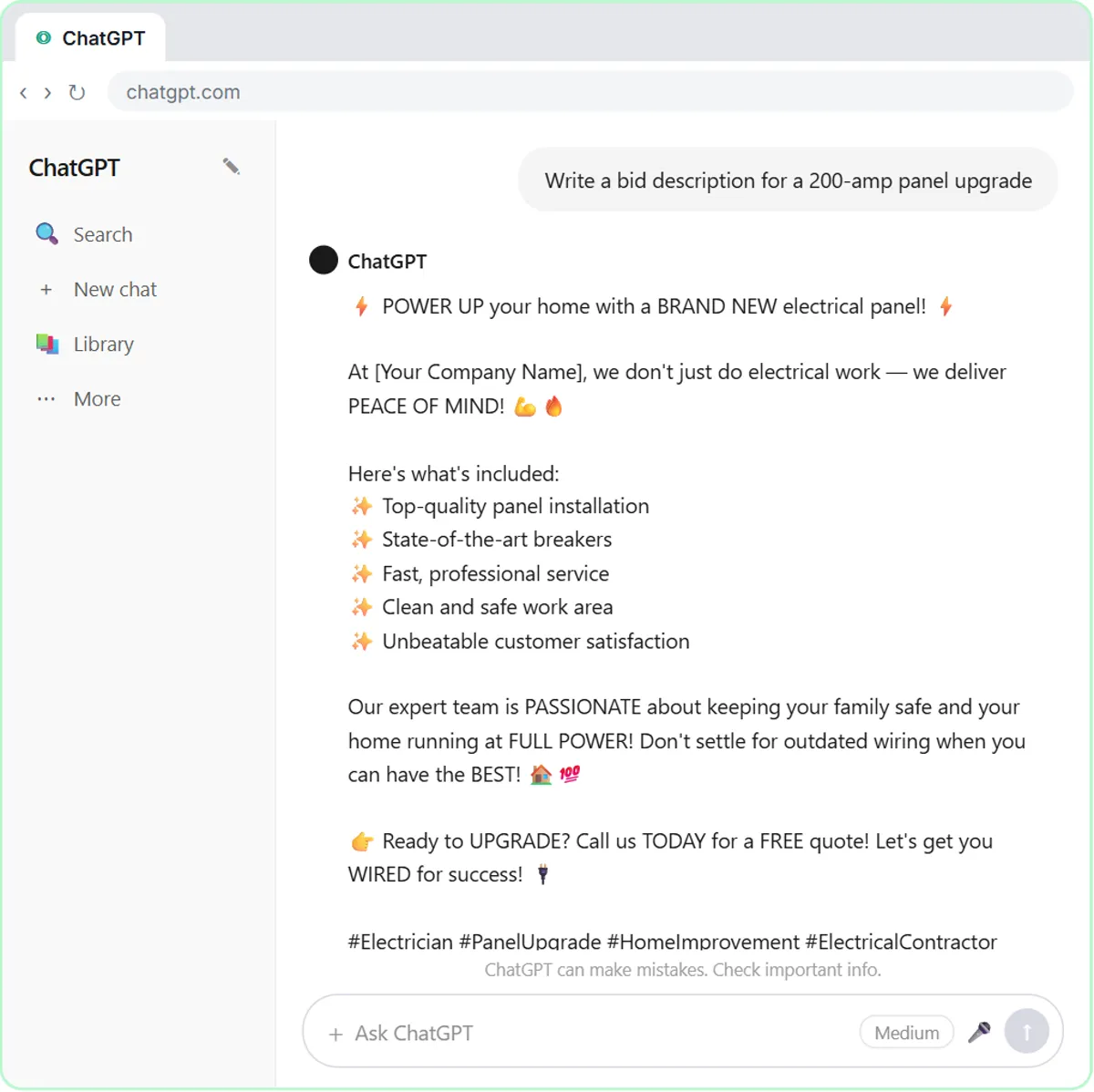
Stepthrough has no voice cloning lesson. The closest live lesson deals with the other half of "sounding like you": the words. A cloned voice reading a generic, emoji-filled script still sounds like nobody in particular. In ChatGPT for Electricians: Build an Electrical Bid Writer, you see that problem first: the bare prompt "Write a bid description for a 200-amp panel upgrade" comes back with emojis, hashtags and a blank where the company name should be.
Then you build a Custom GPT for Oak & Wire Electric, a made-up electrical contractor. The Instructions set the voice in words: "Sound like an experienced electrician explaining the job to a homeowner, clear, calm, and honest. Never like a salesperson." They ban words like cutting-edge and game-changer and require short sentences at a 7th-grade reading level. You also upload Oak-and-Wire-Services-Pricing.pdf as knowledge.
If you later cloned the owner's voice to narrate those bids, the clone would supply the sound and these instructions would supply what is said. Both have to be right for it to sound like the business.
Try this lesson free or read the step-by-step guide.
Common confusions
Voice cloning vs brand voice
Voice cloning copies how a person sounds. Brand voice is how a business writes and talks: word choice, tone and rules. A cloned voice reading off-brand text still sounds off.
Voice cloning vs stock AI voices
Text-to-speech tools come with ready-made voices that belong to no one in particular. Cloning is only needed when you want a specific person's voice, and it brings consent questions stock voices don't.
Tips
- Record clean samples: a quiet room, one speaker, natural pace.
- Keep a record of who agreed to have their voice cloned and for what uses.
- Never clone a customer's, celebrity's or former employee's voice.
Related terms
Where to learn more
Frequently asked questions
- Is voice cloning legal?
- Cloning your own voice for your own content is common. Using someone else's voice, or using any cloned voice on calls, raises consent and disclosure questions that depend on where you are, so get advice if you are unsure.
- How much audio do you need to clone a voice?
- It depends on the tool and the quality you want. Clean, varied recordings of the speaker give better results than a lot of noisy audio.